


21 Sep A Gut-Liver-on-a-Chip for Studying Drug Absorption, Metabolism, and Interactions
Orally administered drugs encounter several biological barriers before reaching systemic circulation. They must cross the intestinal epithelium, interact with transporters and metabolic enzymes, and subsequently undergo hepatic metabolism. Conventional cell cultures typically examine these processes separately, while animal models may not fully reproduce human drug responses. This creates a need for human-relevant microfluidic systems that can connect intestinal absorption with liver metabolism while also incorporating immune responses. In this study, the researchers developed an integrated gut–liver-on-a-chip platform, called iGLoC, to study these processes using the breast cancer drug abemaciclib as a model compound.
The iGLoC platform combines two interconnected microfluidic chips: a gut chip containing an intestinal epithelial and immune compartment, and a liver chip containing three-dimensional hepatic spheroids. The intestinal model consisted of Caco-2 and mucus-producing HT-29 cells cultured above THP-1-derived macrophages, while the liver compartment contained HepG2 spheroids. A fluidic bridge connected the two modules so that compounds crossing the intestinal barrier could subsequently enter the hepatic compartment. This configuration allowed the researchers to follow drug transport, metabolism, immune responses, and liver toxicity within the same flow-connected system.
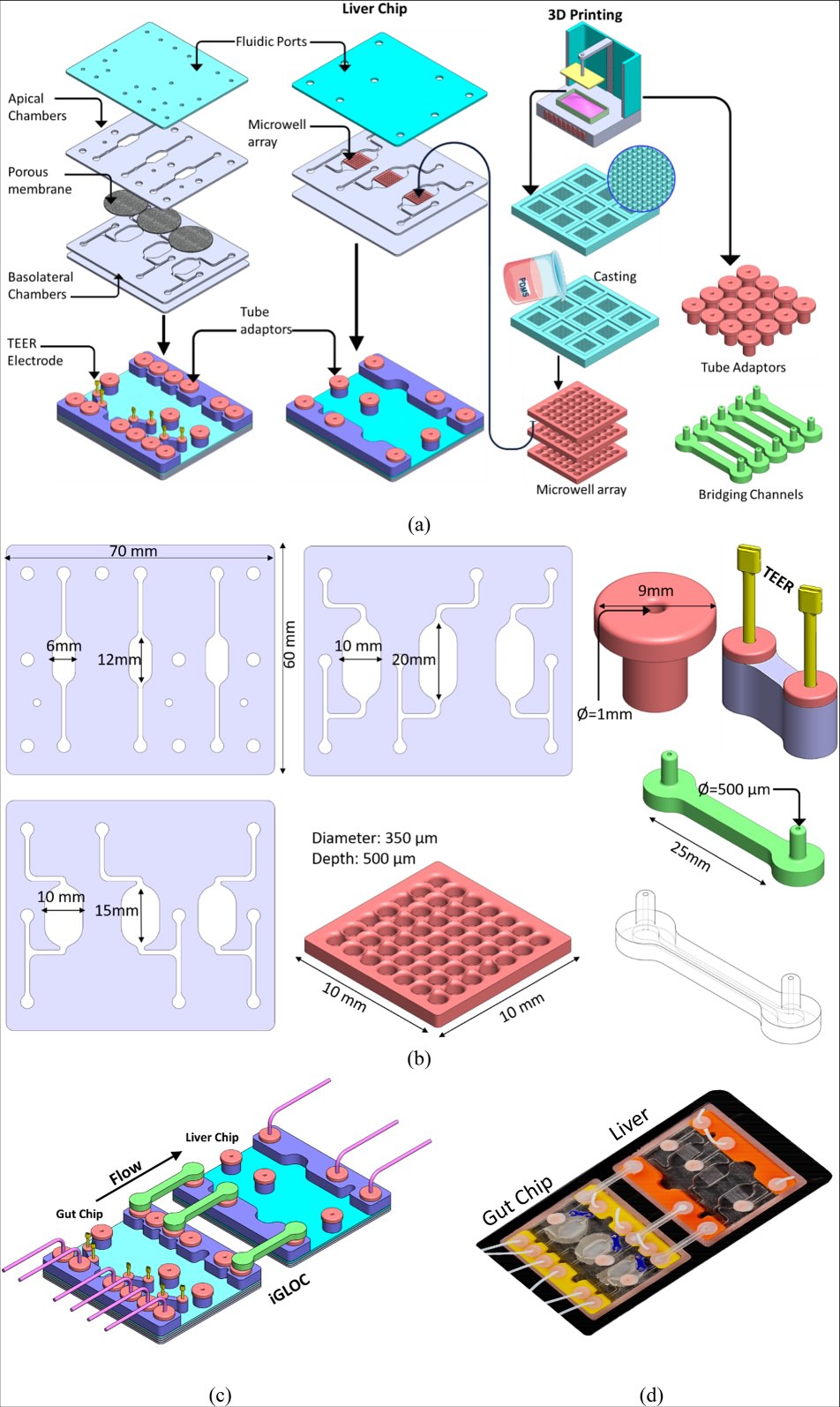
“(a) Fabrication and assembly process of the iGLoC system. Each chip was constructed through the assembly of various PMMA layers, which were cut using a laser cutter and bonded together using double-sided adhesive tape. The microwell mold was fabricated using 3D printing, cast in PDMS, and inserted into the liver chip. The tube adaptors were also 3D printed using a soft polymer. The bridging channel was likewise 3D printed. (b) The dimensions of the fluidic components. (c) The fully assembled iGLoC system. (d) An overview image of the fabricated iGLoC.”. Reproduced from Sultan K. AlShmmari, Dana Cialla-May, Jürgen Popp, Mohammed Zourob, Qasem Ramadan; Integrated “gut–liver”-on-a-chip (iGLoC): an immune-competent and metabolically active microphysiological model of the gut–liver axis for drug screening, validated by abemaciclib pharmacokinetics, hepatotoxicity, and drug–drug interaction studies. Lab Chip 2026; with permission from The Royal Society of Chemistry.
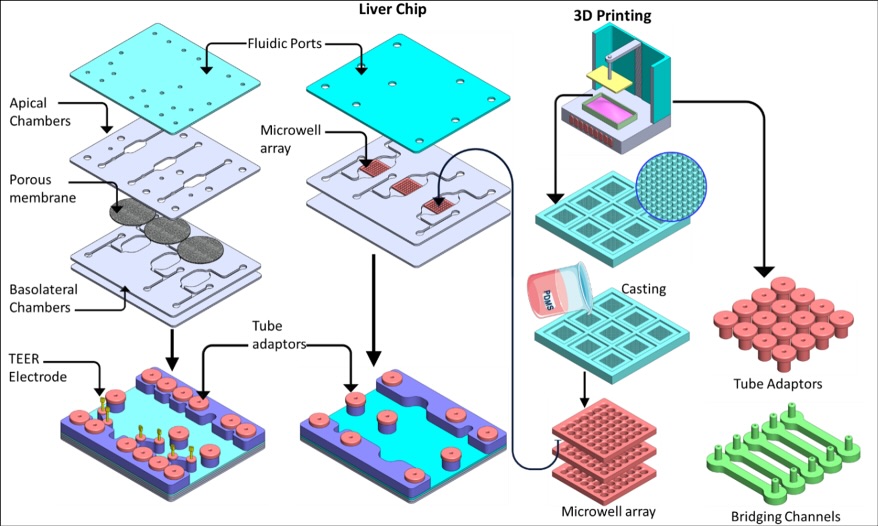
The microfluidic device was produced using a combination of laser machining, casting, and 3D printing. During microfluidics fabrication, layers of PMMA were laser-cut and bonded with double-sided adhesive. The gut chip contained vertically stacked apical and basolateral chambers separated by a 0.4 µm porous membrane. For the liver chip, PDMS was cast against a 3D-printed mold to create an array of 360 microwells, each 350 µm in diameter and 500 µm deep, where HepG2 cells could self-assemble into spheroids. A 3D-printed U-shaped bridge connected the gut and liver modules and enabled controlled perfusion between them.
For the intestinal model, Caco-2 and HT-29 cells were seeded at an 80:20 ratio and cultured under flow for three weeks to establish a differentiated epithelial barrier. The researchers confirmed mucus production, brush-border microvilli, tight-junction proteins, transepithelial electrical resistance, paracellular permeability, and functional P-glycoprotein transport. THP-1 cells were differentiated into macrophage-like cells in the basolateral compartment to provide an immune component. In parallel, HepG2 cells formed approximately 190 µm spheroids in the liver chip and were evaluated through viability, albumin and urea production, and CYP3A4 activity. Drug concentrations and the major abemaciclib metabolites M2 and M20 were quantified using a validated UPLC-MS/MS assay.
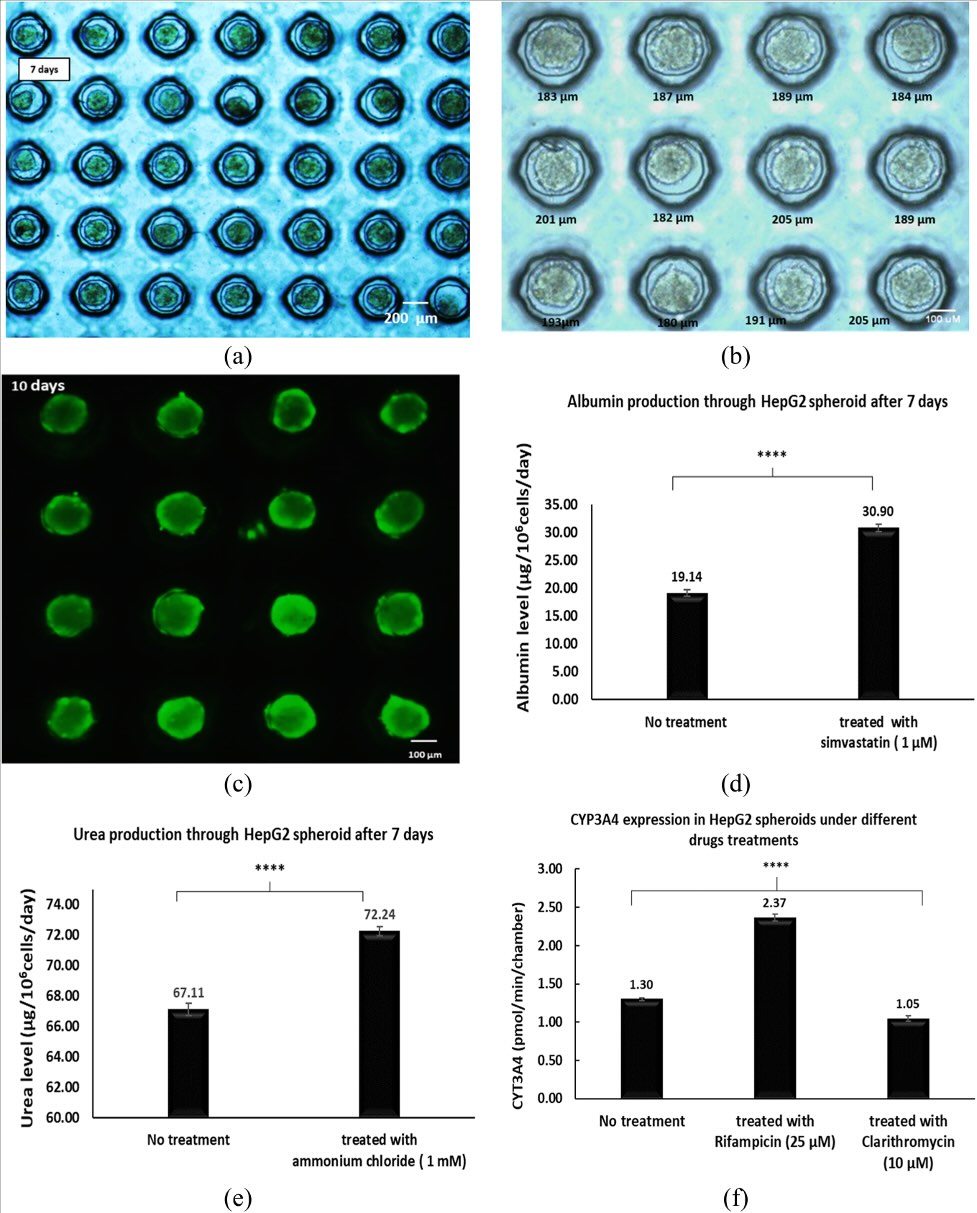
“(a and b) Optical images of the spheroid array culture in the liver chip, with diameter 190 ± 11.90 μm. (c) Fluorescent image of spheroid array using the live/dead assay (10-days). (d) The production of albumin in the spheroid cultures with/without treatment with simvastatin. Normalized to 106 cells, Student’s t-test, p < 0.0001. (e) The production of urea in the spheroid cultures with/without treatment with ammonium chloride. Normalized to 106 cells, Student’s t-test, p < 0.0001. (f) CYP3A4 expression in the spheroid culture. Data are expressed as the expression per independent chamber as mean ± SD (n = 3). Statistical significance determined by one-way ANOVA analysis, ****p < 0.0001”. Reproduced from Sultan K. AlShmmari, Dana Cialla-May, Jürgen Popp, Mohammed Zourob, Qasem Ramadan; Integrated “gut–liver”-on-a-chip (iGLoC): an immune-competent and metabolically active microphysiological model of the gut–liver axis for drug screening, validated by abemaciclib pharmacokinetics, hepatotoxicity, and drug–drug interaction studies. Lab Chip 2026; with permission from The Royal Society of Chemistry.
When abemaciclib was introduced into the intestinal compartment, the platform produced a time-dependent sequence resembling oral drug disposition. Drug levels decreased in the apical compartment, increased transiently on the basolateral side of the intestinal barrier, and appeared later in the liver chamber. The HepG2 spheroids also generated the clinically relevant metabolites M2 and M20. Manipulating CYP3A4 and P-glycoprotein produced distinct drug–drug interaction profiles. Rifampicin, an inducer of these pathways, reduced downstream exposure to abemaciclib, whereas clarithromycin increased delivery of the parent drug to the hepatic compartment. Disrupting the intestinal barrier with dextran sulfate sodium accelerated drug passage and produced higher early hepatic exposure. The liver spheroids also showed concentration-dependent increases in ALT and AST following abemaciclib treatment, while the immune-containing gut model detected changes in macrophage cytokine responses.
The iGLoC platform demonstrates how connecting intestinal, immune, and hepatic models under controlled flow can provide information that is difficult to obtain from isolated cell cultures. In a single system, the researchers examined intestinal permeability, transporter activity, hepatic metabolism, metabolite formation, drug–drug interactions, inflammation-associated changes in exposure, and liver toxicity. The current model still has limitations, particularly because HepG2 spheroids have lower CYP3A4 activity than primary human hepatocytes and the intestinal compartment relies on Caco-2-derived cells. Nevertheless, the study shows how integrated gut–liver microphysiological systems could support more mechanistic evaluation of orally administered drugs before clinical testing.
Figures are reproduced from Sultan K. AlShmmari, Dana Cialla-May, Jürgen Popp, Mohammed Zourob, Qasem Ramadan; Integrated “gut–liver”-on-a-chip (iGLoC): an immune-competent and metabolically active microphysiological model of the gut–liver axis for drug screening, validated by abemaciclib pharmacokinetics, hepatotoxicity, and drug–drug interaction studies. Lab Chip 2026; https://doi.org/10.1039/d6lc00377j with permission from The Royal Society of Chemistry.
For more insights into the world of microfluidics and its burgeoning applications in biomedical research, stay tuned to our blog and explore the limitless possibilities that this technology unfolds. If you need high quality microfluidics chip for your experiments, do not hesitate to contact us.